A blend of spices, cocoa, and tradition that has been making its way to our Christmas tables since the Renaissance.
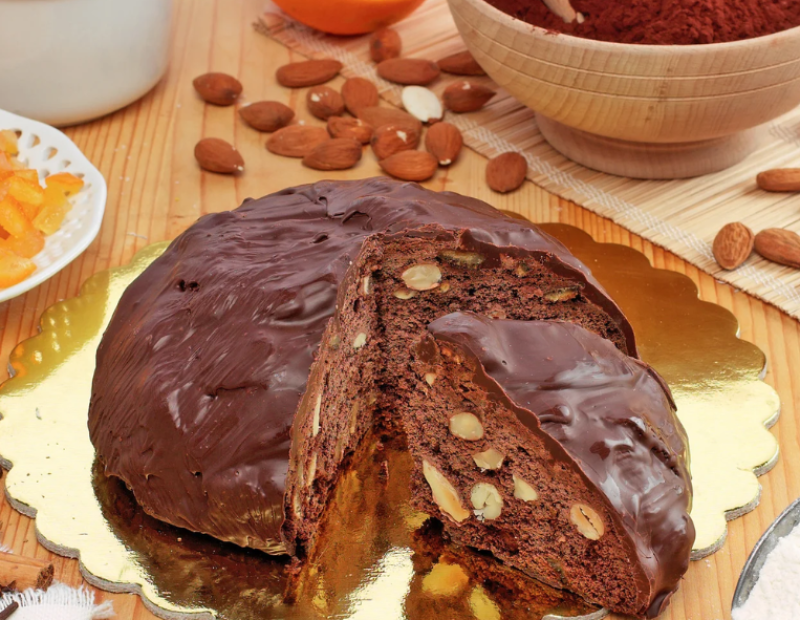
Pampepato di Ferrara is distinguished by its zuccotto shape, reminiscent of a skullcap, and by the intensity of its flavors. The dough, rich in almonds, hazelnuts, candied fruit, raisins, and spices such as cinnamon and nutmeg, is enriched with dark chocolate, which envelops the entire cake in a thick, shiny glaze.
Pampepato di Ferrara, now recognized as a Protected Geographical Indication (PGI), is more than just a Christmas dessert, but a piece of history that embodies the prestige of the Este court and the spirituality of the convents. Its origins are intertwined with those of the Renaissance: as early as the 15th century, sweets enriched with dried fruit and precious spices, true symbols of opulence and power, were circulating at the court of Borso d’Este.

The turning point came in the 17th century, when the nuns of the Corpus Domini monastery in Ferrara reinterpreted these ancient recipes in light of new European gastronomic trends. Cocoa, recently arrived from the New World thanks to Spanish expeditions, was used sparingly, as if it were a gem, a rare and precious powder reserved only for the most influential figures. Thus was born Pan del Papa, destined for the ecclesiastical hierarchies and the nobility. Over time, the name changed, oscillating between “Pampepato” and “Pampapato,” without affecting its essence.
The result is an explosion of aromas and flavors: the sweetness of candied fruit meets the warm notes of spices and the depth of cocoa, in a balance that has endured over the centuries. It’s a dessert best enjoyed fresh and soft, avoiding overly dry versions that deplete its essence. Even today, it remains the quintessential Christmas gift, a symbol of a pastry art that combines popular tradition and aristocratic memory.
While the written language has alternated between Pampepato and Pampapato over the centuries, the Ferrara dialect has always called it Pan da Nadàl, emphasizing its festive and communal nature. Although pepper isn’t the main ingredient, popular etymology has helped establish this spicy name in the collective imagination, reinforcing the idea of a dessert associated with an intense and enveloping flavor. The PGI recognition, obtained in 2015, not only protected a historic recipe but also safeguarded a cultural identity that Ferrara continues to proudly defend.
 Study Italian in Italy