
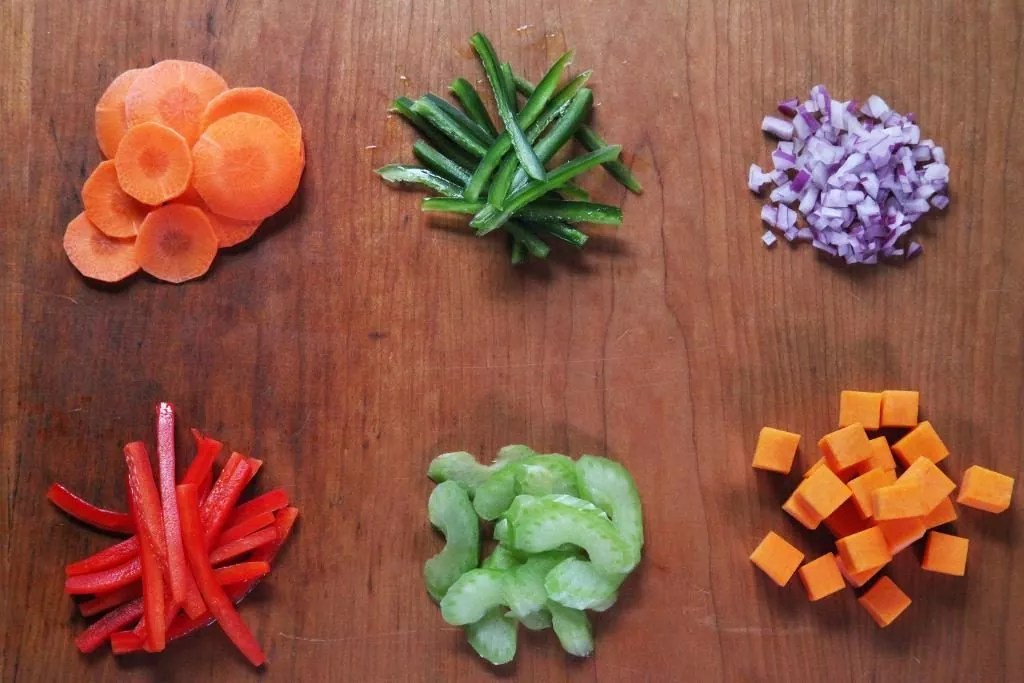
Cooking cuts (such as julienne, brunoise, macedonia, or chiffonade) are standardized techniques for preparing vegetables, fruit, or other ingredients in uniform shapes, such as cubes, sticks, or strips, to ensure even cooking, a pleasing appearance, and enhanced flavor. The choice of cut depends on the recipe and the type of ingredient, as each shape has specific characteristics and uses.
The choice of cut depends on the recipe and the type of ingredient, as each shape has specific characteristics and uses.

Main types of cut:
Round: Thin, round slices, ideal for carrots, zucchini, or onions.
Stick (or bâtonnet): Achieved by slicing the vegetable into rounds and then cutting them into equal-sized parallelepipeds.
Julienne: Cut into long, thin, matchstick-like sticks, used for salads, sautés, or stir-fries.
Brunoise: Very small cubes, obtained by cutting the julienne into cubes of about 1-2 mm. Fruit salad: Cutting into cubes of about 5-6 mm on a side, for fruit or vegetables.
Mirepoix: Medium cubes (about 6-8 mm) of celery, carrot, and onion, used as a flavoring base for many dishes.
Giardiniera: Vegetables cut into slices about 5 mm thick, then into short sticks, and finally into cubes.
Chiffonade: Lettuce, basil, or spinach leaves are cut into thin strips, rolled up, and then sliced.
Concassé: Cook tomatoes into cubes about 5 mm thick, after blanching them.
Why choosing the right cut is important:
Even cooking: Pieces of the same size cook at the same time.
Aesthetics: Presentation is important, and the shape of the cuts contributes to the dish’s elegance.
Taste and flavor: The size of the cut influences the perception of flavor and the speed with which the ingredients release their aromas.
 Study Italian in Italy