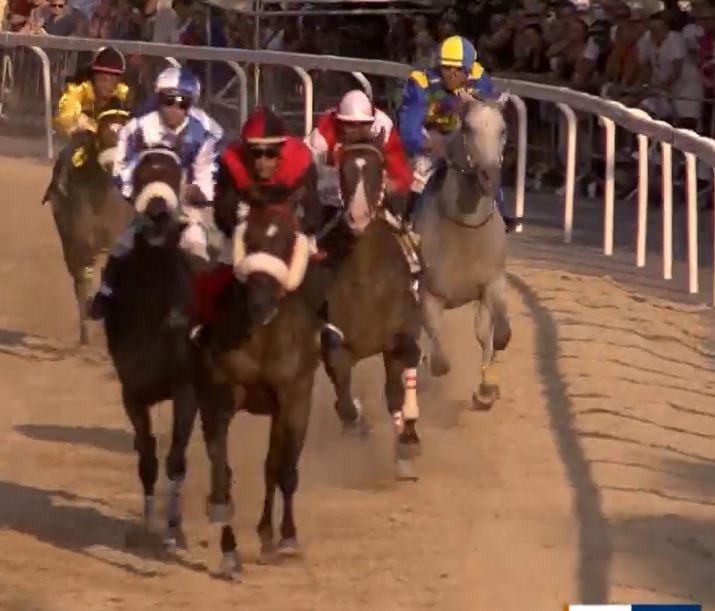
The Cavalcade of the Assumption is the oldest historical reenactment based on attested written sources in Italy. It is held annually in Fermo to celebrate the city’s devotion to the patron saint, the Virgin Mary, assumed into heaven.
Everyone knows the famous Palio di Siena, but similar, age-old traditions exist throughout Italy. Today we move to the Marche region, specifically to Fermo.
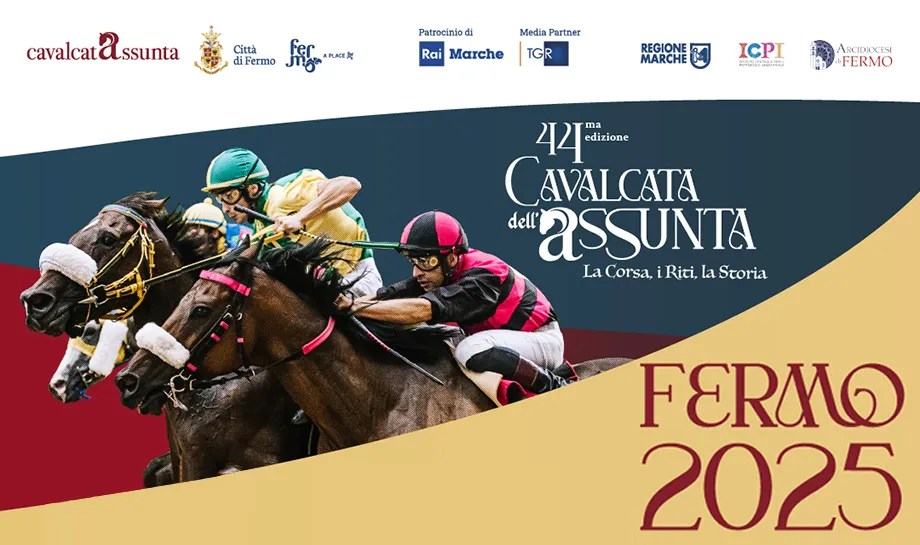

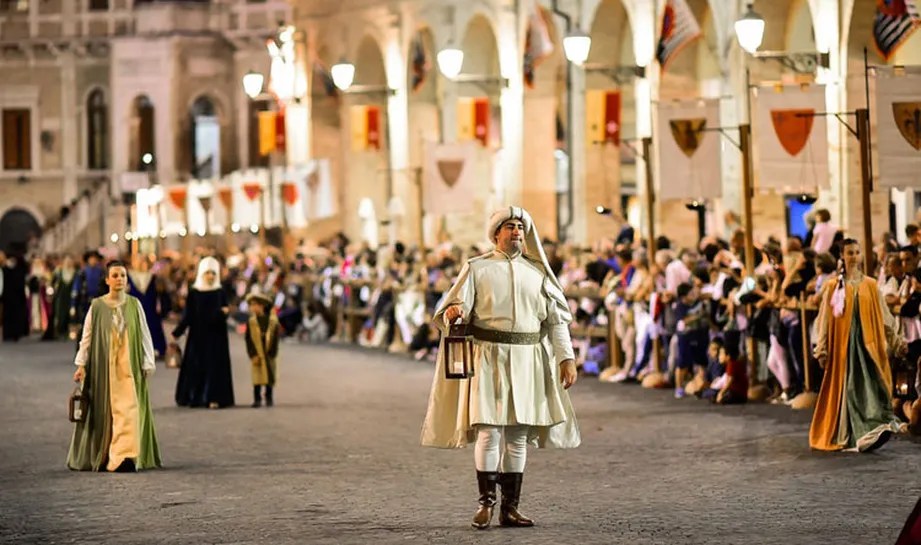
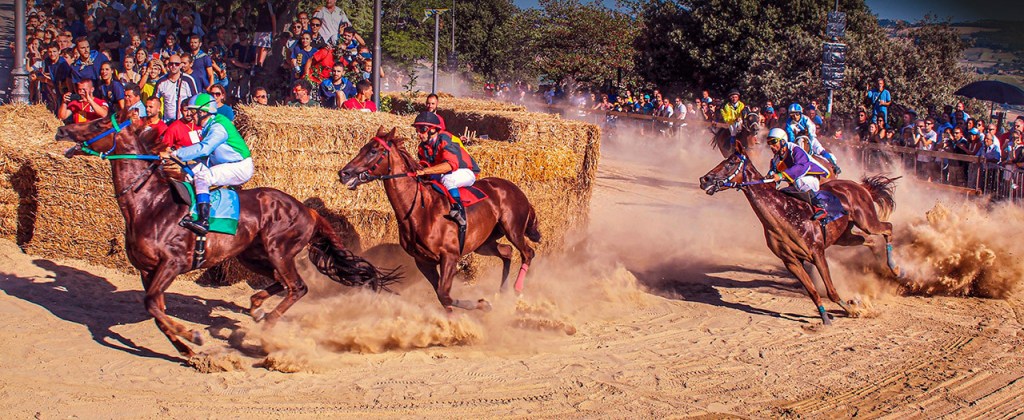
The Cavalcata dell’Assunta is the oldest historical reenactment in Italy based on attested written sources. It is held annually in Fermo to celebrate the city’s devotion to the patron saint, the Virgin Mary, who was assumed into heaven.
The cult of the Virgin Mary has ancient origins; suffice it to say that the first cathedral dedicated to the Assumption, “Santa Maria in Castello,” stood on the Girfalco hill in the 5th century. The first written documents referring to the festival dedicated to the Virgin Mary, patron saint of the city and diocese, date back to the year 1000, although they do not specify the specifics of the celebrations. In a document from 1182, Monterubbiano, Cuccure, and Montotto, “accomandati” castles, reaffirmed their commitment to bring a palio to Fermo every year on the occasion of the Feast of the Assumption.
The Cavalcata dell’Assunta (Ride of the Assumption) was a processional parade in which the main participants rode on horseback, lit by torches and candles—it was therefore also called “Luminaria”—on the evening of August 14th, the eve of the festival. It set out from the Church of Santa Lucia in the western part of the city, ascended the Corso, stopped in Piazza Grande, and finally reached the Cathedral to offer the traditional candles and gifts to the Patron Saint.
Contrade: the beating hearts of the Palio
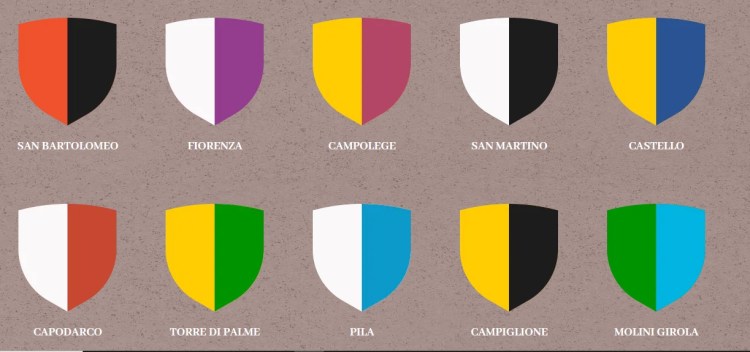
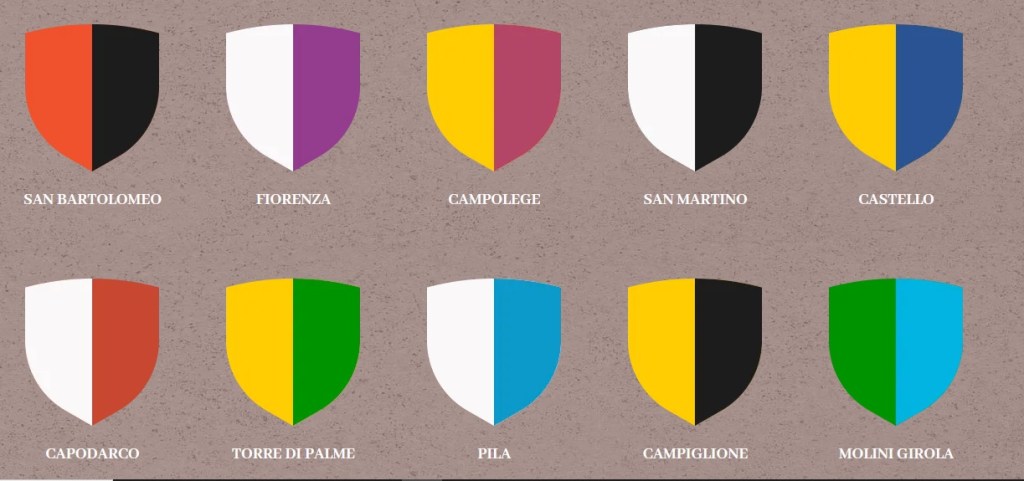
The Fermo area is made up of ten Contrade (districts), divided into two subgroups. In addition to the six “historic” districts of the city of Fermo, four more have been added, known as “foranee,” meaning their territories are located outside the walls of the historic center. Of these, two (Torre di Palme and Capodarco) are called Castelli (Castles), while two are called Ville (Campiglione and Molini Girola).
Learn Italian … know local Tradition and History
 Study Italian in Italy