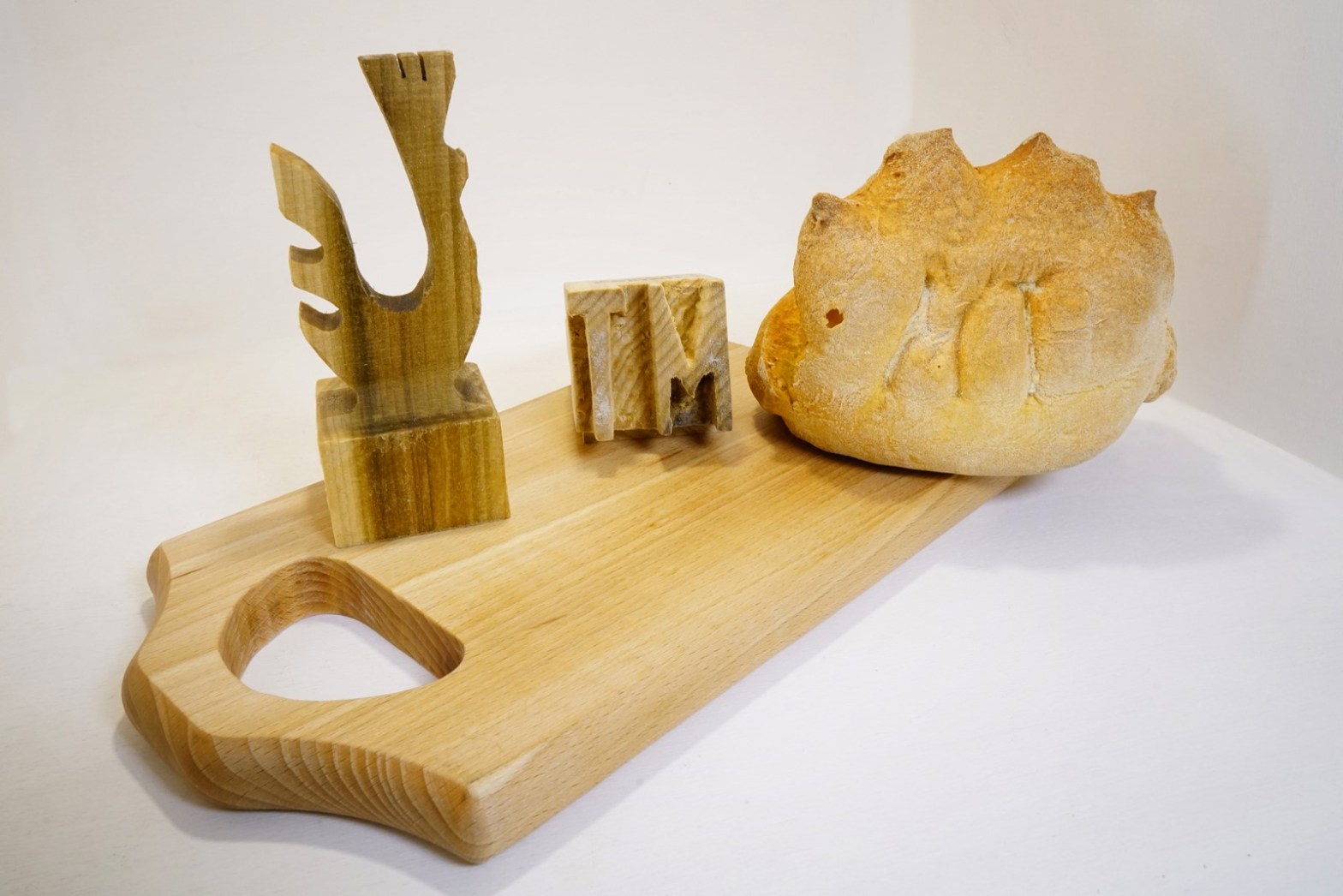
The bread stamp is one of the symbols of the pastoral art of the Murgia Materana. Until the 1950s, housewives kneaded bread at home and delivered it to the oven boys for baking, but not before stamping each loaf to distinguish it from those of other families.
The stamps were commissioned to shepherds who made them during the transhumance period, when they were far from their homes and had free time to devote to wood carving, which was never lacking in their journey.
The stamp is essentially made up of three sections: the initials of the head of the family or another distinctive family sign are carved on the base, connected by a handle to the upper artistic-figurative part decorated with architectural or sacred elements, human figures, domestic animals, symbols of virility and prosperity. In addition to the practical function of making the loaves of bread recognizable after baking in public ovens, there was a symbolic and ritual meaning linked to the different depictions.

The bread stamp
The oldest stamps featured stylisations of the solar symbol at the base, later replaced by the effigy of the family or the initials of the head of the family; when the eldest man passed away, the stamp was burned and replaced by another piece decorated in the same way but with the initials of the new head of the family. In more remote times, the handle was decorated mainly with flowering branches, a symbol of prosperity. Other symbols of prosperity are the hen and stylisations of the female figure. The phallic representations, the rooster, the dog, the male figure, the gendarme are, instead, symbols of virility with a protective function of the family nucleus deprived of the head of the family during the transhumance period. Even everyday life finds space in the depictions of the bread stamp, through the reproduction of sacred symbols and architectural elements.
The bread stamp was also used as a pledge of love, offered by the suitor to the woman he loved, kept by her if she consented, or returned to reject the request for engagement; it was also broken if an understanding was stormily interrupted.
Today, the bread stamp represents a decorative element that integrates perfectly into modern and ancient furnishings, bringing to mind distant and mysterious atmospheres.
 Study Italian in Italy